
 Consequent to the India's current state of affairs with respect to Corruption and Misgovernance, even the 'Snow' has turned Black—the obvious have also lost its credibility.
BUY NOW
 'BIG BOSS' is a scoop about a fervent professional who joins many firms in anticipation of getting a conducive work environment and an ideal 'Boss' in each.
'Melody' (Meloni + Modi) generates "Parishram hi safalta ki kunji hai!"

India’s Cultural Vocabulary Goes Global: From “Yoga” to “Sabhyata ka crash course India se seekh lo!”
Language has always been one of the most powerful carriers of culture. When a word travels across borders and enters global conversations without translation, it signifies something deeper than popularity—it reflects influence, admiration, and curiosity about the civilization from which that word emerged. Over the last few decades, India has witnessed exactly this phenomenon. Words rooted in Indian philosophy, spirituality, relationships, and daily life are steadily finding a place in international discourse.
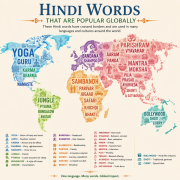
For years, terms like Yoga, Guru, Karma, Mantra, Avatar, and Kismet have comfortably existed in English dictionaries and global conversations. Today, however, the world is not just borrowing isolated words; it is increasingly engaging with Indian concepts, emotions, and cultural frameworks. This trend has become even more visible when world leaders themselves use Indian expressions or ideas while addressing global audiences.
One of the most talked-about examples came when Italy’s Prime Minister, Georgia Meloni, used the Hindi line, “Parishram hi safalta ki kunji hai!” meaning “Hard work is the key to success.” The statement resonated widely because it reflected more than diplomatic courtesy. It showed how Indian wisdom, often rooted in simple but profound life principles, connects universally with people across cultures.
The phrase itself carries the essence of Indian thinking. In India, parishram is not merely labor; it signifies dedicated effort, discipline, and sincere commitment toward a goal. Indian civilization has historically celebrated perseverance over instant success. Ancient scriptures, folk tales, and modern motivational narratives alike reinforce the idea that sustained effort eventually bears fruit. When a global leader uses such a phrase naturally, it demonstrates how Indian values are becoming globally relatable.
Similarly, Iceland’s Prime Minister Kristrún Frostadóttir reportedly used the word “Sambandh,” a Hindi and Sanskrit-origin term broadly associated with relationships, connection, and meaningful bonds. While English offers words like “relationship” or “association,” sambandh carries a warmer and more layered meaning. It reflects emotional interconnectedness, mutual responsibility, and human connection beyond transactional interactions.

This is where Indian vocabulary becomes particularly fascinating. Many Indian words are difficult to translate directly because they contain cultural philosophy within them. A word often carries emotion, ethics, spirituality, and social understanding simultaneously. For example, dharma is not simply “religion.” It can mean duty, moral order, ethical conduct, and cosmic balance all at once. Likewise, seva means service, but specifically selfless service performed with humility.
The growing global use of Indian words reflects the world’s search for concepts that modern vocabulary sometimes fails to capture adequately. In an increasingly fast, digital, and fragmented world, people are looking for language that speaks to emotional wellness, balance, mindfulness, and human connection. Indian languages, shaped by thousands of years of philosophical inquiry, offer exactly that richness.
The global rise of Yoga perhaps remains the most visible example. Once viewed merely as an ancient Indian practice, yoga has transformed into a worldwide movement promoting physical fitness, mental peace, and holistic health. Yet, even after becoming globalized, the Sanskrit word itself remained unchanged. The world did not replace it with “stretching exercises” or “mind-body discipline.” It accepted Yoga as it is, acknowledging that the concept could not be fully replicated through translation.
The same happened with Guru. Originally referring to a spiritual teacher who dispels darkness and ignorance, the term is now used globally for experts and mentors in almost every field. Technology gurus, fitness gurus, and business gurus are common expressions today. While the modern usage may differ from its spiritual roots, the word’s Indian origin remains unmistakable.
Then comes Kismet, a word deeply embedded in conversations about destiny and fate. Though its journey includes Persian and Turkish influences, in South Asia it evolved into a commonly understood emotional expression. Today, English speakers casually say, “It was kismet,” often without realizing the word’s rich cultural journey through the Indian subcontinent.
Similarly, Mantra has evolved from sacred Vedic chants into a global expression for guiding principles or personal philosophies. Corporate leaders speak about business mantras, athletes discuss training mantras, and individuals adopt life mantras. The word carries a sense of focused repetition and inner conviction that ordinary substitutes rarely convey.
Even terms like Ayurveda, Namaste, Pranayama, and Atmanirbhar are increasingly appearing in international discussions. This trend indicates something larger than linguistic borrowing—it reflects India’s growing soft power.
Soft power emerges not through military strength or economic dominance alone, but through culture, ideas, values, and inspiration. India’s cinema, cuisine, spirituality, technology sector, and democratic traditions already contribute significantly to its global image. Now, its linguistic and philosophical concepts are adding another layer to that influence.
Interestingly, this cultural exchange is happening organically. People are not adopting Indian words because they are forced to; they are embracing them because these concepts address modern concerns. Mindfulness, sustainability, emotional well-being, community, and inner peace are becoming central global conversations. Indian traditions have explored these themes for centuries.
This growing appreciation also reflects a shift in how the world views India. Earlier, Indian culture was often exoticized or limited to stereotypes. Today, there is increasing respect for India as a civilization with intellectual and philosophical depth. From meditation apps using Sanskrit terminology to international universities offering courses on Indian philosophy, the curiosity is expanding rapidly.
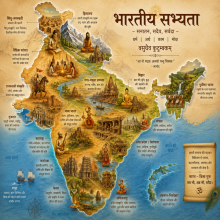
And perhaps that is why expressions like “Sabhyata ka crash course India se seekh lo!” resonate so strongly today. Loosely meaning “Learn the crash course of civilization from India,” the phrase humorously yet confidently reflects India’s civilizational pride. India is one of the world’s oldest continuous civilizations, with traditions of pluralism, dialogue, spirituality, mathematics, medicine, art, and literature stretching back thousands of years.
The phrase also captures a modern cultural confidence among Indians. For years, globalization was viewed largely as the spread of Western language and culture. But now the exchange is becoming more balanced. Indian ideas are no longer confined within national borders—they are shaping global conversations.
Social media has accelerated this process dramatically. A single phrase used by an international leader can instantly become viral content. Young Indians especially take pride in seeing Hindi or Sanskrit-origin words receive global recognition. Memes, reels, and discussions amplify these moments, transforming them into symbols of cultural validation.
However, the real significance lies beyond trends. Language shapes thought. When the world adopts Indian words, it also begins engaging with Indian ways of understanding life. Concepts such as karma encourage accountability, yoga promotes harmony, seva inspires compassion, and sambandh emphasizes relationships.
This does not mean Indian civilization is perfect or beyond criticism. Every culture evolves through introspection and change. Yet, the increasing global acceptance of Indian concepts highlights the timeless relevance of many of its ideas.
As the world becomes more interconnected, cultural influence will increasingly depend on authenticity rather than dominance. India’s greatest strength may lie precisely here—in its ability to offer ideas that are simultaneously ancient and contemporary.
From “Parishram hi safalta ki kunji hai!” to “Sambandh” and “Sabhyata ka crash course India se seekh lo!”, these phrases symbolize more than linguistic curiosity. They represent the expanding footprint of Indian thought in global consciousness.
And perhaps this is only the beginning.
(All Images above are from Google Archives)